
ListeningMind.AI / Wiki / Intent Intelligence
Six Purchase Decision Axes: CEP, Goal, KBF, RTB, Limits, Avoidance
The six axes of purchase decisions are a framework for analyzing a buying situation across six dimensions: category entry points (CEP), purchase purpose, key buying factors (KBF), reasons to believe (RTB), constraints, and avoidance factors. This framework shifts the question of why a customer did not buy from vague preferences to specific conditions.
ConceptDanny ParkCEO, Ascent AI·Updated 2026-10-22 14:27 KST·History · 2 contributorsEditSign in to edit
Six Axes
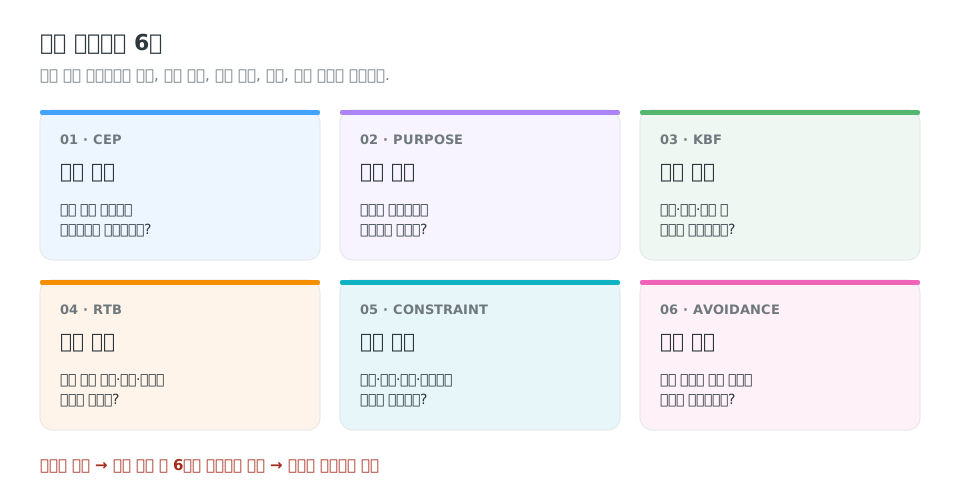
| Axis | Question Asked |
|---|---|
| CEP / Buying situation | When and in what everyday situation did the category become necessary? |
| Purchase purpose | What problem are they trying to solve, or what outcome are they trying to achieve? |
| KBF / Selection criteria | What are they comparing: ingredients, performance, size, price range, or convenience? |
| RTB / Reason to believe | What tests, certifications, or official sources are needed to believe the claims? |
| Constraints | What conditions narrow the options, such as budget, space, compatibility, delivery, or regulations? |
| Avoidance factors | What inconveniences, side effects, risks of failure, or hassles is the consumer trying to avoid? |
Knowing only the CEP is not enough to fully understand a purchase situation. Once you identify the situation in which someone thinks of a category, you must also examine why they want to buy, what they compare, and what makes them hesitate.
Example: Robot Vacuum for a Home with High Door Thresholds
| Axis | Example in this case |
|---|---|
| CEP | Situation where cleaning is needed in a home with door thresholds |
| Purchase purpose | Allowing the robot to move between multiple rooms to clean |
| KBF | Threshold-crossing performance, movement stability |
| RTB | Official manufacturer specifications and testing conditions |
| Constraints | Actual threshold height and material, home layout |
| Avoidance factors | The robot getting stuck on thresholds and stopping |
This is an illustrative interpretation. Search data, product specifications, and verifiable official sources determine which items are confirmed.
Leave Unconfirmed Fields Empty
The six axes are not fully present in every purchase situation. It is better to leave unconfirmed fields empty rather than letting AI fill them with plausible guesses. Empty fields serve as tasks for further research.
The Six Axes and the 15 Intent Elements
The six axes are an analytical framework for interpreting purchase intent. ListeningMind's Intent Knowledge Graph expands this into eight decision-layer elements (CEP, usage context, micro-context intent, KBF, constraints, numerical threshold, avoidance factors, RTB) and organizes them alongside seven knowledge-layer elements into the 15 intent elements. The purchase purpose from the six axes is broken down into micro-context intent and usage context, with numerical thresholds added.
Where to Use This
- Product planning: Identify which selection criteria or constraints the current product fails to address.
- Messaging: Design messages around everyday situations and tasks to be done, rather than demographic personas.
- Product detail pages: Address the proof and conditions customers want to verify using official product information. See ACO for PLP and PDP.
- Try it now: CEP Finder and Intent KG
Questions
- How is this different from a persona?
- A persona describes who a person is. The six axes describe what criteria they use to choose and what makes them hesitate in a given situation. Even for the same person, the values across the six axes change depending on the situation.
- Where does the data for the six axes come from?
- It is built from signals observed in search queries, related questions, search paths, and search result pages, with evidence confirmed through product specifications and official records. It does not attempt to reproduce individual consumers' inner thoughts, but represents aggregated purchase context.
Sources
- ListeningMind 용어 사전 · 2026-10-21