
ListeningMind.AI / Wiki / Marketing AX for companies
ACO for PLP and PDP: Connecting Buying Context to PLPs and PDPs
Agentic Commerce Optimization (ACO) connects a customer's buying context with official product information so that humans and AI agents can compare and select products. The product listing page (PLP) addresses which candidates to view first, while the product detail page (PDP) addresses why a product is acceptable to choose.
ConceptDanny ParkCEO, Ascent AI·Updated 2026-10-22 00:49 KST·History · 2 contributorsEditSign in to edit
The Gap Between Customer Questions and Product Facts
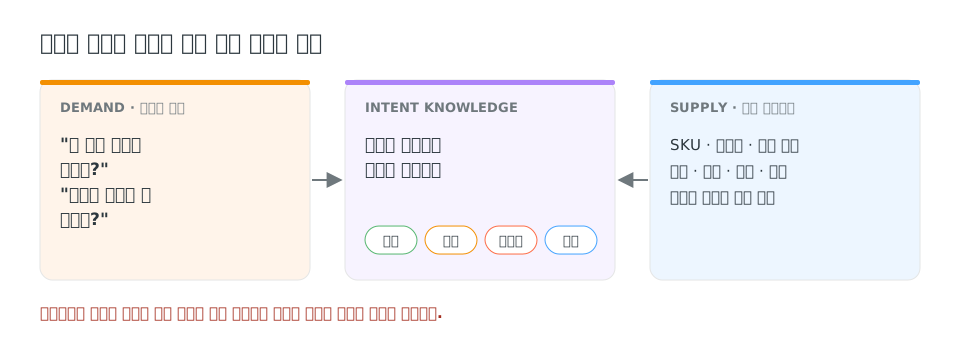
Consumers describe their situations and problems. Businesses manage product facts such as SKU, ingredients, specifications, price, and inventory. For AI to make judgments on behalf of consumers, these two must be accurately connected. The result of this connection is displayed in one of four states.
| Status | Meaning | Example |
|---|---|---|
| Verified | Can be answered with official evidence | Official specifications include test conditions |
| Insufficient | Information required for the answer is missing | Ingredients are listed, but evidence of skin suitability is missing |
| Inconsistent | Contents differ between sources | Volume differs between the detail page and the product feed |
| Pending | Do not answer until verified | Cabin baggage requires checking airline and national regulations separately |
ACO for PLP: Which Candidates to Show First
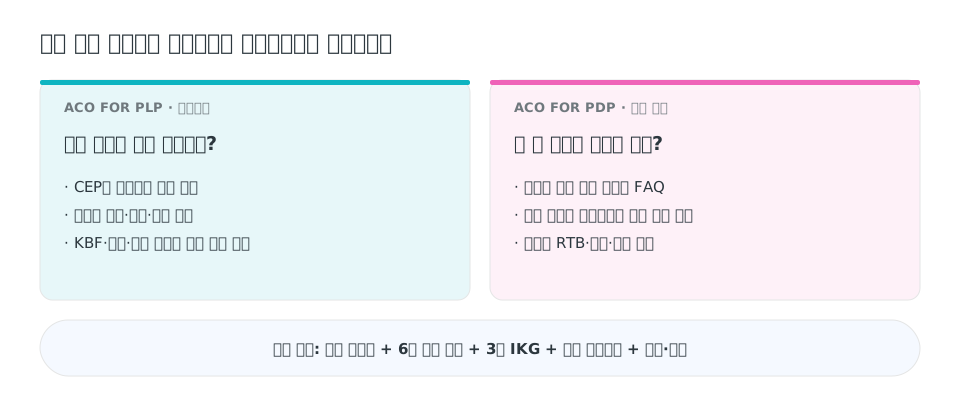
Product listings on e-commerce sites are usually organized by brand, popularity, and price range. However, the point where consumers actually start searching is often "can this solve my problem?" rather than "which brand is it?" For someone looking for a robot vacuum cleaner for a home with high door sills, pets, or difficulty installing direct water plumbing, sorting by brand name and price alone is not enough.
On a PLP, you review category entry aligned with CEPs, situational filters, core attributes needed for comparison, guidance based on constraints, and candidate group composition. However, a specific product is not placed at the top simply because it appears frequently in search data. There must be verified data showing that the actual product meets the criteria, and sales policies, inventory, price, ranking fairness, and information freshness are considered together.
ACO for PDP: Why Is It Acceptable to Choose This Product?
The detail page is where you show, in an easy-to-understand way using official product facts and evidence, which purchase situations and selection criteria this product fits. Detailed descriptions, FAQs, technical specifications, test conditions, structured data, and product feeds are all included.
- If someone asks about a product for a home with high door sills, phrasing such as "powerful driving performance" is not enough. You must show what the official door sill clearance specification is and under what conditions it was tested. If there is no basis for comparison, state those limitations clearly.
- For skin-related products, do not assume that a product suits a specific skin condition. Verify official full ingredient lists, precautions for use, and obtained test evidence along with its scope of application.
Differences from Generating SEO Copy
ACO is not about polishing AI-friendly sentences. It includes identifying what decision criteria are needed for actual customer questions, cross-checking them against official product information, supplementing missing details, and withholding answers for unverified claims. Generating plausible descriptions for unverified efficacy and safety is a risk, not optimization.
While the PLP helps customers discover products, the PDP gives customers and agents the basis to select that product. The two pages serve different functions, but the underlying consumer intent and verified product information must be the same. That intent comes from the Intent Knowledge Graph.
What Works Now and What Is Under Development
Search intent data, APIs, and MCP are currently available. Refining the IKG, automated application and verification of ACO, and PLP expansion are areas under continuous development and testing. This does not mean every stage is already operated in a fully automated manner.
- Check product detail pages: ACO App
- Capabilities to build together: GEO + ACO + AOO
Questions
- Is ACO about rewriting detail page copy using AI?
- No. Before touching the copy, it cross-checks whether the conditions and evidence the customer wants to verify exist in the official product information. If missing, it supplements them, and it withholds answers for unverified claims.
- Which should be done first, PLP or PDP?
- If the issue of customers failing to find candidates is larger, start with PLP. If they reach candidate options but lack the basis to choose, start with PDP. Both use the same buying context data.